Mastering The B2B SaaS Customer Life Cycle
The customer life cycle is a map of a user’s journey with your product. It starts at their first touchpoint and continues long after they become a paying customer.
The traditional sales funnel stops at the purchase. In B2B SaaS, that’s backwards — the real relationship often begins after sign-up.
Why this matters for PLG
A free trial sign-up is not the finish line. It’s the starting gun. The life cycle model keeps your whole team aligned on what happens next: activation, adoption, retention, expansion, advocacy.
Why The Life Cycle Beats The Sales Funnel
For a product-led growth (PLG) SaaS company, the linear sales funnel is broken. It treats a free trial sign-up as the outcome. In reality, it’s the beginning of the real test.
Thinking in terms of a life cycle shifts your focus from a one-time transaction to a long-term relationship. It forces better questions:
- Did the user achieve a valuable outcome in their first session?
- Are they integrating your tool into their daily work?
- Do they see enough value to upgrade to a paid plan?
When you think in cycles, you build a product that retains and expands users.
The Five Stages of The SaaS Customer Life Cycle
Each stage has a clear user goal and a measurable business outcome.
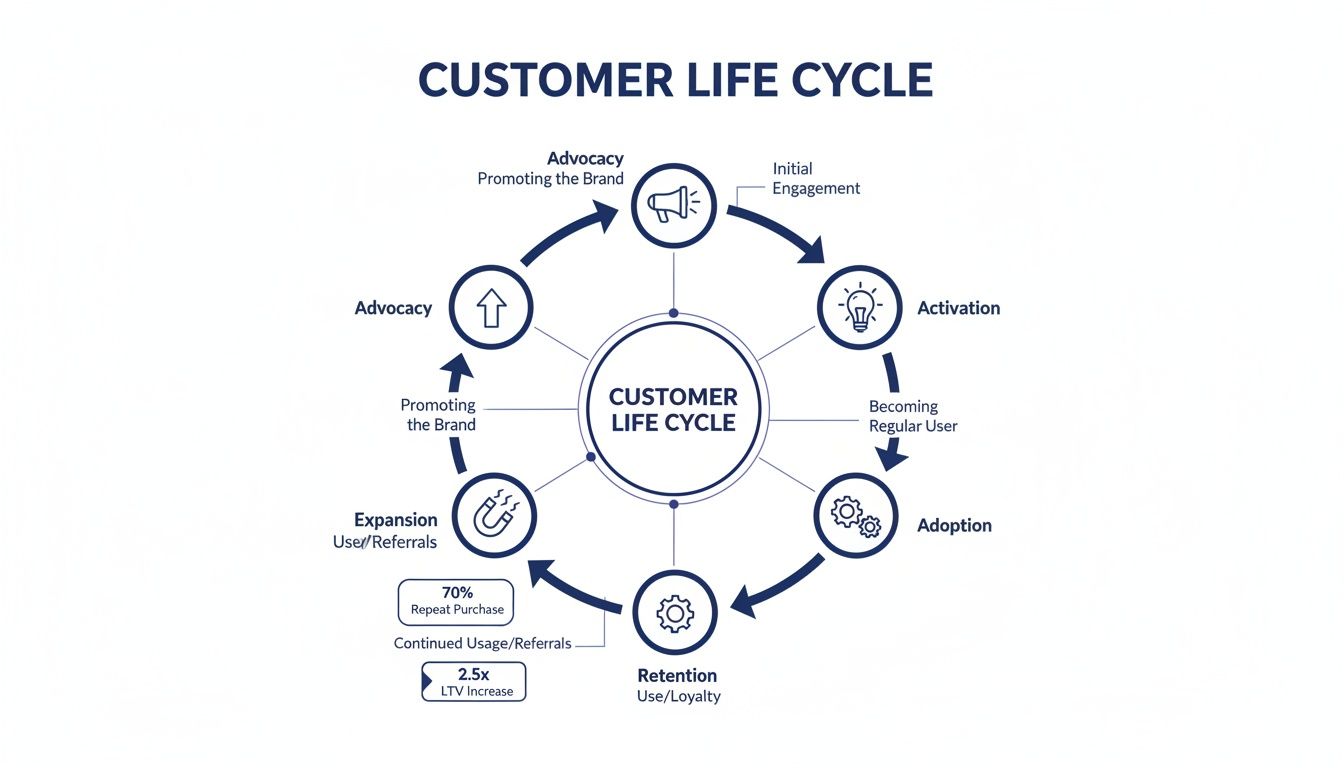
| Stage | User Goal | Business Metric |
|---|---|---|
| Activation | Experience first value (“Aha!”) | Activation Rate |
| Adoption | Build a habit around core workflows | Core action engagement / feature adoption |
| Retention | Decide the product is worth paying for | Trial-to-paid conversion, retention |
| Expansion | Grow usage, seats, and scope | Net Revenue Retention (NRR) |
| Advocacy | Recommend you to others | Referrals, reviews, NPS |
The final stage (advocacy) feeds back into the first (awareness via referrals), creating a compounding growth loop.
A Practical Example (Project Management SaaS)
A marketing manager signs up for your trial:
- Activation: Creates a project and invites a teammate (Activation Rate)
- Adoption: Runs three real projects over two weeks (core engagement)
- Retention: Upgrades when they hit a limit (trial-to-paid conversion)
- Expansion: Adds seats or a premium add-on later (NRR)
- Advocacy: Leaves a review and refers peers (referrals)
Driving Users to Their “Aha!” Moment (Activation)
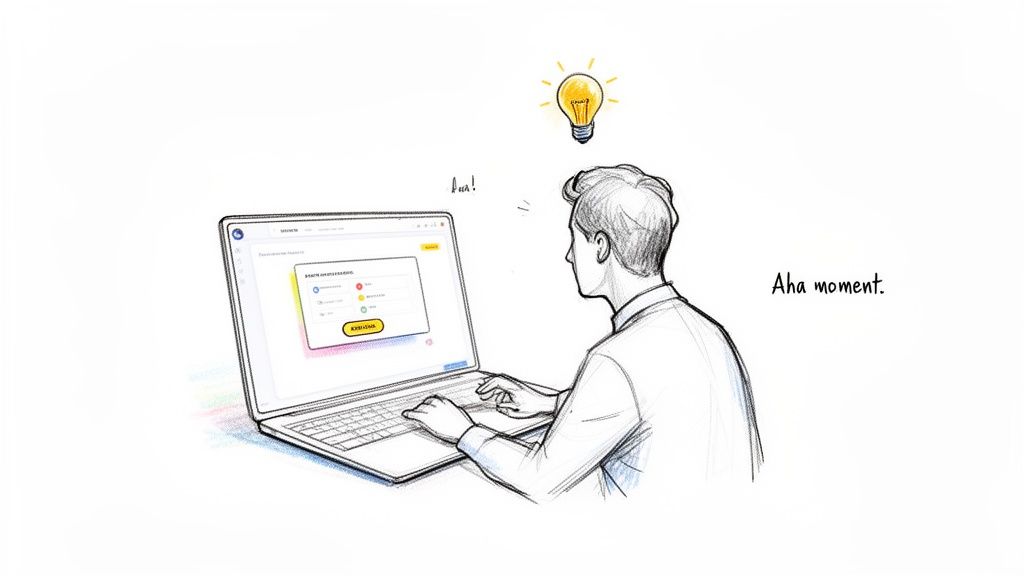
Activation isn’t logging in. It’s the first time a user experiences your product’s core value.
- For a project management tool: create a task and invite a teammate
- For an analytics platform: connect a data source and see the first dashboard populate
Your activation event is the first point where a user leans back and says, “Okay, I get it now.”
Defining and Measuring Activation
Define activation with absolute clarity. “Engagement” is too fuzzy. Look at users who converted: what first 2–3 actions show up consistently?
Your key metric becomes Trial-to-Activation Rate: the percentage of new trial users who complete the activation event within a timeframe (e.g., 7 days).
Implementation Section: Engineer the Path to “Aha!”
- Build an onboarding checklist focused on only the 2–3 steps required for activation.
- Use behavior-triggered help (in-app guidance or email) when users stall.
- Celebrate completion to reinforce progress and create momentum into adoption.
For more onboarding tactics, see Customer Onboarding Best Practices.
Turning Initial Value Into a Daily Habit (Adoption)
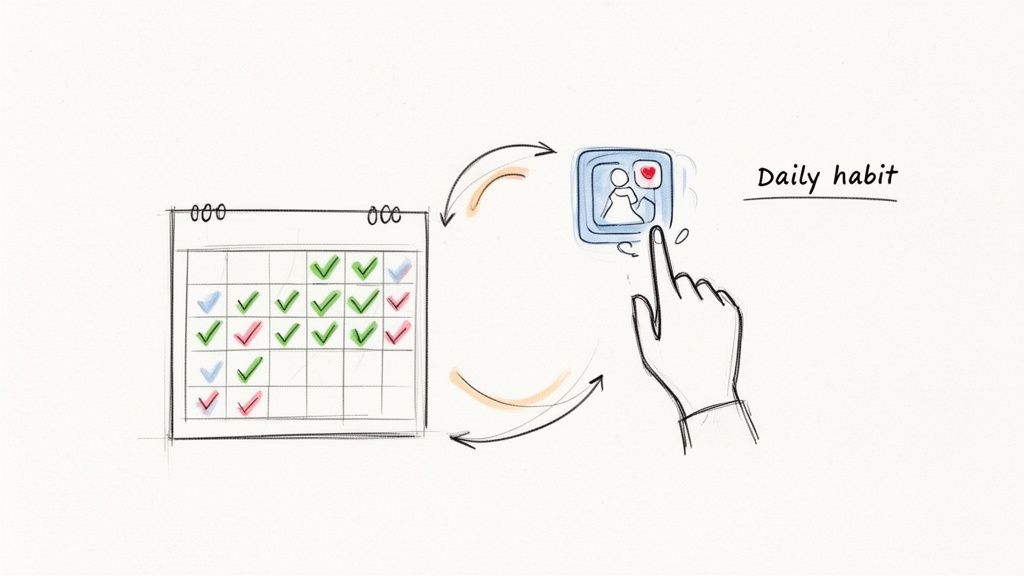
The adoption stage turns the first win into a recurring habit. The goal is not “use more features.” It’s to move users from activation to the few behaviors that make the product indispensable.
Identifying Your Stickiest Features
Segment users who converted and retained (e.g., 90 days). What secondary features did they adopt in their first 30 days?
Adoption isn’t about promoting every feature. It’s about finding the 1–2 “power features” that make your product essential.
Track this with Feature Adoption Rate on those power features.
Implementation Section: Designing Adoption Journeys
- Segment by inaction: activated users who haven’t adopted the sticky feature by day 14
- Trigger an educational nudge: short in-app prompt or email showing the outcome
- Measure lift: compare adoption rate vs a control group
If you want the instrumentation + funnel view for this, see Unlocking Product Analytics for SaaS Growth.
Converting Engaged Users Into Paying Customers (Retention)
Retention is where an engaged trial user decides if your product is worth paying for. Time-based trial countdowns treat everyone the same. Behavior-driven conversion treats power users differently.
Identifying High-Intent Buying Signals
Look for patterns that separate converters from churners:
- Approaching a plan limit: usage is high and value is proven.
- Inviting teammates: evaluation becomes team adoption.
- Attempting premium features: users show what they value.
- Viewing billing: explicit purchase intent.
Your primary metric here is Trial-to-Paid Conversion Rate.
Implementation Section: Proactive Conversion Trigger
Example for a tool limited to 5 projects in trial:
- Trigger: user creates project #4.
- Email: acknowledge progress and introduce the benefit of unlimited projects.
- In-app prompt: next login shows a small upgrade nudge with a clear CTA.
Turning Happy Customers Into a Growth Engine (Advocacy)
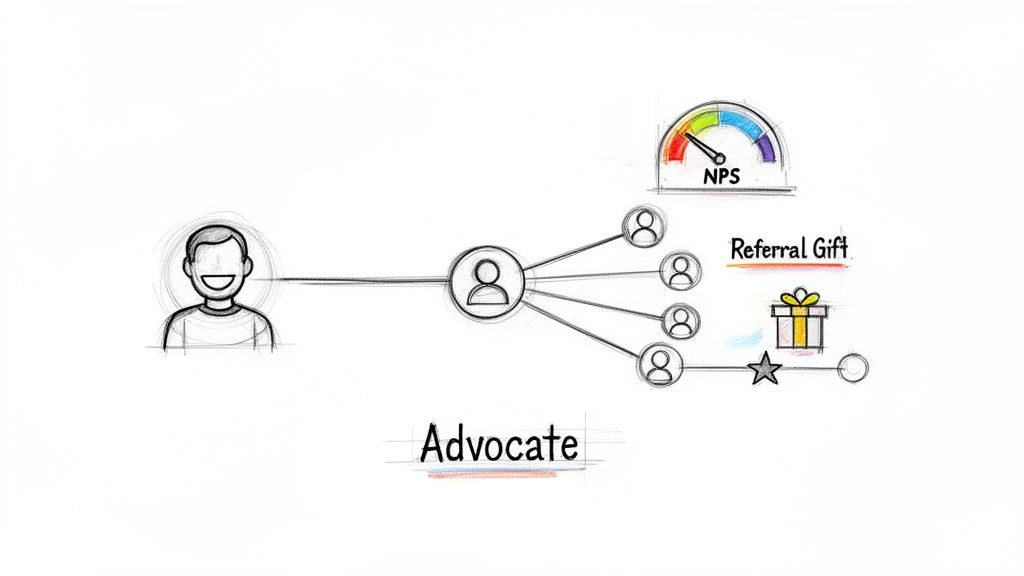
Advocates complete the cycle by feeding high-quality prospects back into your funnel.
Identifying Potential Champions
Look for:
- high NPS (9–10)
- high engagement over time
- accounts that expanded (added seats / upgraded)
Implementation Section: Automate Advocacy
- Trigger when a user submits NPS > 8.
- After 24 hours, request a review (e.g., G2) with a 2-minute ask.
- For those who engage, invite them into a referral flow a week later.
This ties directly back to retention: your happiest customers tend to be your lowest-churn, highest-expansion accounts. If you want the retention framing, see Define Customer Retention.
The EngageKit View: Orchestrate The Life Cycle (Not Just Measure It)
Most teams can map the customer life cycle. Fewer teams can run it consistently — because the hard part is operationalizing the next best step at each stage.
EngageKit helps you move users through the cycle by turning product signals into actions:
- Define milestone events: activation, adoption, intent, and advocacy signals.
- Detect stalls: identify users who aren’t progressing toward value.
- Trigger guidance automatically: in-app nudges and follow-ups that match user behavior.
If you want to turn your lifecycle map into a predictable growth system, start with one activation definition and one funnel — then automate what happens when users stall.
Subscribe to our newsletter
The latest news, articles, and resources, sent to your inbox weekly.